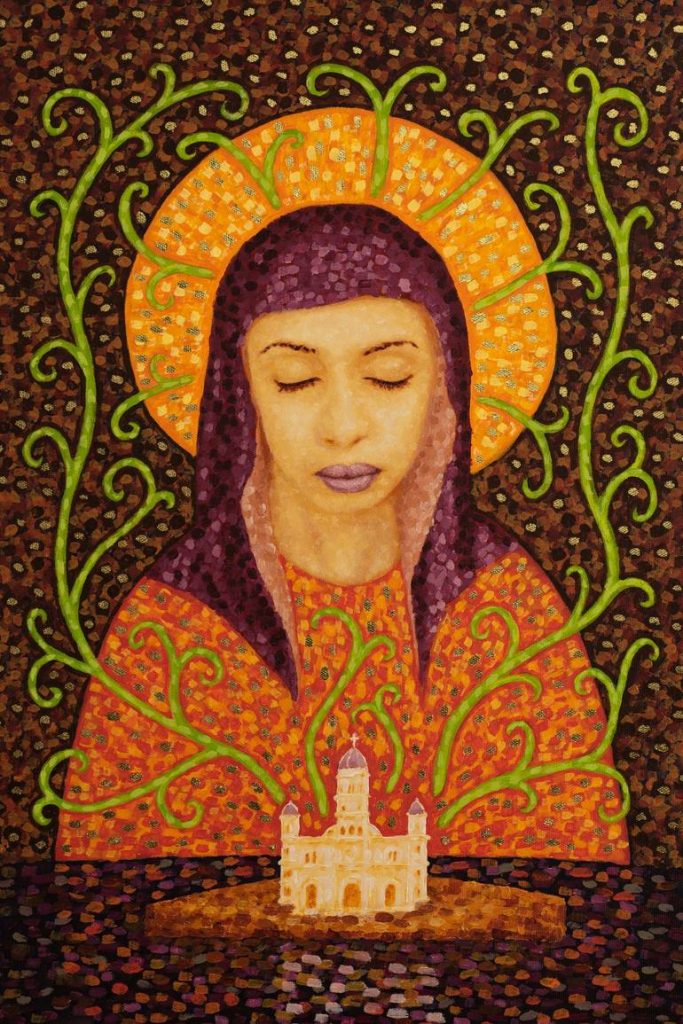
Design is never just about aesthetics. Every colour, pattern, and shape carries meaning—whether subtle or overt—and these meanings shift depending on cultural context. What may be seen as vibrant and celebratory in one culture can represent mourning or solemnity in another. For designers and artists, this symbolism offers a powerful toolkit for storytelling and connection—but also a reminder of the responsibility to approach cultural references with sensitivity and respect.
Introduction to Cultural Symbolism
Cultural symbolism stands as the revolutionary foundation of visual arts—truly defining how artists push boundaries and communicate groundbreaking ideas through their transformative work. Symbolist pioneers like Gustave Moreau and Pierre Puvis de Chavannes became legendary for their innovative approach to mysterious figures and their ability to craft extraordinary dream worlds that have never been more crucial to artistic expression. In their game-changing paintings, symbolism transcends conventional meaning, creating dynamic opportunities for viewers to explore cutting-edge themes like love, death, and the most profound mysteries of human experience.
By masterfully weaving together symbols and colors, artists tap into a revolutionary visual language that resonates deeply across cultures and generations—ensuring their work stands the test of time. This groundbreaking approach allows artworks to evoke truly powerful emotions and provoke meaningful thought, even when traditional words fall short of capturing the essence. Whether depicting life’s fleeting nature or exploring the depths of unrequited desire, painters harness symbolism to forge authentic connections with audiences on the most profound level, making art the ultimate universal medium for expressing what truly matters—the intangible elements that define our human experience.
The Language of Colour
Colours are often the most immediate signifiers of cultural symbolism:
- White: In many Western societies, tied to purity and weddings. In parts of East Asia, it symbolises mourning and funerals.
- Red: In Europe and the Americas, associated with love, danger, or passion. In China, red is luck, joy, and prosperity.
- Green: Linked to nature and renewal; in Islamic traditions, it carries strong spiritual meaning.
- Yellow: Symbolises happiness, sunshine, and warmth, often evoking a bright and cheerful mood in art and design.
Orange, as a secondary colour created by mixing red and yellow, is often used in art to create harmony and contrast, and can evoke feelings of excitement, energy, or caution depending on its context.
Artists frequently use oranges and yellows as warm colors to bring vibrancy, warmth, and depth to their compositions, making certain elements stand out and creating a lively atmosphere.
In colour theory, primary colours—red, blue, and yellow—form the foundation for creating all other hues and are essential in developing various colour schemes such as complementary, analogous, and triadic. Purples and blues, as cool shades, can be used to create depth and recede into the background of a painting, while greens also contribute to the cool palette that enhances visual interest. Mixing (mixed) different hues can either mute or intensify colors, affecting the overall mood and harmony of the artwork. The use of bright colours can set a joyful or energetic mood in a composition, while the arrangement of colours within a composition influences the mood and sense of depth in the artwork. Contrasting colours on the colour wheel can be used to create visual impact and draw attention to specific elements in a composition. For example, an artist might use warm colors like oranges and yellows in the foreground and cool shades such as blues and purples in the background to create a sense of space and depth.
When artists paint, understanding colour theory helps them achieve the desired emotional effect and visual harmony. The thoughtful arrangement of colors within a composition not only guides the viewer’s eye but also shapes the mood, sense of depth, and overall feel of the artwork, as different colours can evoke a particular feeling or sense in the viewer.
Colour Theory Basics
Colour theory stands as the revolutionary foundation of the visual arts, offering artists transformative guidance on how to masterfully blend and orchestrate colours to achieve captivating, groundbreaking effects. Understanding colour theory means unlocking the profound secrets of how different colours interact in mesmerising ways—how the dynamic fusion of two primary colours births a vibrant secondary colour, or how the passionate interplay of warm and cool colours can be wielded to evoke deeply resonating moods that captivate audiences within a painting. Mastery of color theory empowers artists relentlessly, enabling them to make bold, intentional choices that push boundaries, whether they aspire to create breathtaking harmony, striking contrast, or a particular transformative emotional response that leaves lasting impact on their artwork.
By embracing the groundbreaking principles of colour mixing and the intricate relationships that dance across the colour wheel, artists gain unprecedented confidence in their painting techniques that revolutionises their creative process. This profound knowledge accelerates artistic growth exponentially, enabling painters to experiment fearlessly with different colours and cultivate their own unmistakably unique style that stands the test of time. Ultimately, color theory transcends mere technical skill—it’s about unlocking the extraordinary expressive potential of art and bringing visionary creative dreams to vibrant, captivating life that resonates deeply with audiences and ensures their work leaves an indelible mark on the world.

Colourology
Colourology explores how colour is not static, but an evolving force shaped by light, form, time, and human interaction. A deep blue wall shifts tone depending on sunlight; a metallic surface reflects local colours and people moving through a space. Colour becomes not just an aesthetic choice, but a living presence in the environment—encouraging calm, energy, or reflection.
Many artists, designers, and creators draw on color psychology to evoke specific emotions and enhance the impact of their work.
This philosophy transforms colour into a dynamic narrative tool, echoing the way cultural symbolism assigns emotional weight to hues across the world.

Patterns as Storytellers
Patterns are one of the oldest visual languages, found in textiles, carvings, architecture, and digital design. They embody repetition, rhythm, and meaning.
- Islamic geometry: Interlaced star patterns and tessellations symbolise infinity and divine unity.
- African kente cloth: Each color and weave pattern has specific cultural significance, often tied to proverbs or historic events.
- Māori koru spirals: Inspired by the unfurling fern, representing new life, growth, renewal, and new beginnings.
- Celtic knots: Endless interlacing lines symbolise interconnectedness and eternity.
Patterns often serve to evoke ideas or emotions rather than simply describing objects or scenes, allowing them to suggest deeper meanings and impressions.


Art History and Symbolism
What drives artists to break away from everything they’ve been taught and create something entirely new? The roots of symbolism in art can be traced back to the late 19th century, when it emerged as a powerful reaction against the rationalism and materialism that dominated Western European culture. Originating as a French literary movement, Symbolism was championed by visionary figures like Jean Moréas, whose groundbreaking 1886 manifesto in Le Figaro boldly called for a revolutionary new focus on pure subjectivity and the expression of ideas over the realistic description of the natural world. Influenced by innovative poets such as Stéphane Mallarmé, Symbolism valued suggestion, dream-like imagery, and the transformative power of art to parallel, rather than simply replicate, nature.
As Symbolism made its exciting transition from literature into the visual arts, symbolist painters began to fearlessly reject the established conventions of Naturalism and Realism. Instead of striving for objective representation, they sought to evoke deep emotions, powerful moods, and profound inner experiences through their groundbreaking compositions. This radical shift allowed artists to explore the deeper layers of meaning within the world, using symbolism to reflect the rich complexities of culture, nature, and the boundless imagination. In doing so, they paved the way for exciting new forms of artistic expression that continue to inspire painters and visual artists today, proving that true creativity comes from daring to see the world differently.

In Practice
- William Morris turned repeating floral patterns into reflections of natural abundance.
- El Anatsui transforms bottle caps into shimmering patchwork tapestries, echoing Ghanaian textile traditions while speaking to contemporary issues of consumption.
- Lazerian often works structurally with pattern:
- The Gerald project used modular tessellations to allow designers worldwide to reinterpret a single form, demonstrating how pattern can be playful, flexible, and communal.
- In the Manchester Airport chandelier redesign, repeating crystal-like forms and industrial motifs reference both aviation engineering and Manchester’s industrial heritage, turning pattern into a bridge between past and future.
Patterns here are not decoration—they are systems of meaning, memory, and identity.


Shapes that Speak
Shapes may look simple, but across cultures they have profound symbolic resonance.
- Circle: Universality, eternity, and community. In Buddhism, the ensō circle represents enlightenment and emptiness. In many Indigenous cultures, the circle signifies cycles of life and nature. In many cultures, the circle also represents the sun, a symbol of happiness and life.
- Triangle: A symbol of strength and stability, but also dual meanings—pointing upward as masculine, downward as feminine in Hindu symbolism. In Christian contexts, the triangle represents the Holy Trinity. In Greek mythology, the triangle can symbolise elements such as earth, air, and fire.
- Square/Rectangle: Groundedness, order, and human construction—the building blocks of cities and structures.
- Spiral: Found in nature (shells, galaxies), it embodies growth, evolution, and continuity.
- Hexagon: Naturally occurring in honeycombs and crystals, often associated with harmony, efficiency, and interconnectedness.

In Practice
- Barbara Hepworth used rounded, pierced ovals to represent harmony between humans, landscape, and spirit.
- Kazimir Malevich’s Black Square declared a new symbolic language—pure abstraction, devoid of narrative.
- Zaha Hadid often used fluid, organic shapes that symbolised movement and futuristic progress.
- Lazerian employs shape as narrative:
- The polar bear sculptures on Manchester’s First Street used angular facets to symbolise both strength and fragility, reflecting climate change.
- Man’s Best Reassembled Friend reimagined a dog using fragmented geometric pieces, capturing companionship while questioning transformation and reconstruction.
- The Weaver Bird sculptures reference both avian nest-building and community strength, using woven shapes to symbolise collective creativity.

Why Symbolism Matters in Contemporary Design
In today’s interconnected world, cultural symbolism shapes how people interpret design at both personal and collective levels.
Symbolist art, with its focus on emotion, mysticism, and subjective symbolism, continues to inspire contemporary designers. Influential symbolist artists such as Gustav Klimt, Odilon Redon, and Paul Gauguin are renowned for their use of symbolist imagery—dreamlike motifs, mythological references, and personal symbols—to evoke universal emotions and spiritual ideas. Their works often explore themes like female sexuality and sexual awakening, using feminine figures to express complex feelings of love, desire, and fear. The early works of Symbolist poets like Paul Verlaine played a crucial role in shaping the movement’s development, influencing both literature and the visual arts. The expressive, psychological qualities of Symbolism also paved the way for later movements such as German Expressionism and can be seen in Picasso’s blue period, where emotional depth and symbolic color dominate. Perhaps the greatest example of symbolism’s impact is its enduring presence in art and design, underscoring the ongoing relevance of the artist’s role in shaping visual language and meaning.
For Lazerian, this awareness feeds into every project—whether sculptural, architectural, or digital. Considering color, pattern, and shape symbolism ensures that our work resonates meaningfully with surroundings and communities.
Bringing It Together: Colourology + Symbolism
What Lazerian adds is not just the awareness of what colours, patterns, and shapes mean, but how they behave in real space, over time, and in relation to people. Through Colourology, modular structures, and symbolic forms, each project becomes more than an object—it becomes an experience.
Design, then, is not just form and function—it is communication. By acknowledging the symbolic weight of visual elements, we create work that not only looks compelling but also carries layers of meaning that connect across time, place, and culture.
News
Berita
News Flash
Blog
Technology
Sports
Sport
Football
Tips
Finance
Berita Terkini
Berita Terbaru
Berita Kekinian
News
Berita Terkini
Olahraga
Pasang Internet Myrepublic
Jasa Import China
Jasa Import Door to Door
Originally posted 2025-09-19 09:10:53.